How we work
A managed system, not a subscription you figure out alone
Lead Reactivation and New Lead Management both work when the system is configured around the business. This is the lifecycle every Nixel client goes through — from first assessment to a continuously managed engine.
Assess
We understand your dormant database, business, CRM, lead sources, economics and communication permissions before anything is switched on.
Connect
The relevant lead database and systems are imported or connected — spreadsheets, CRM, sources.
Configure
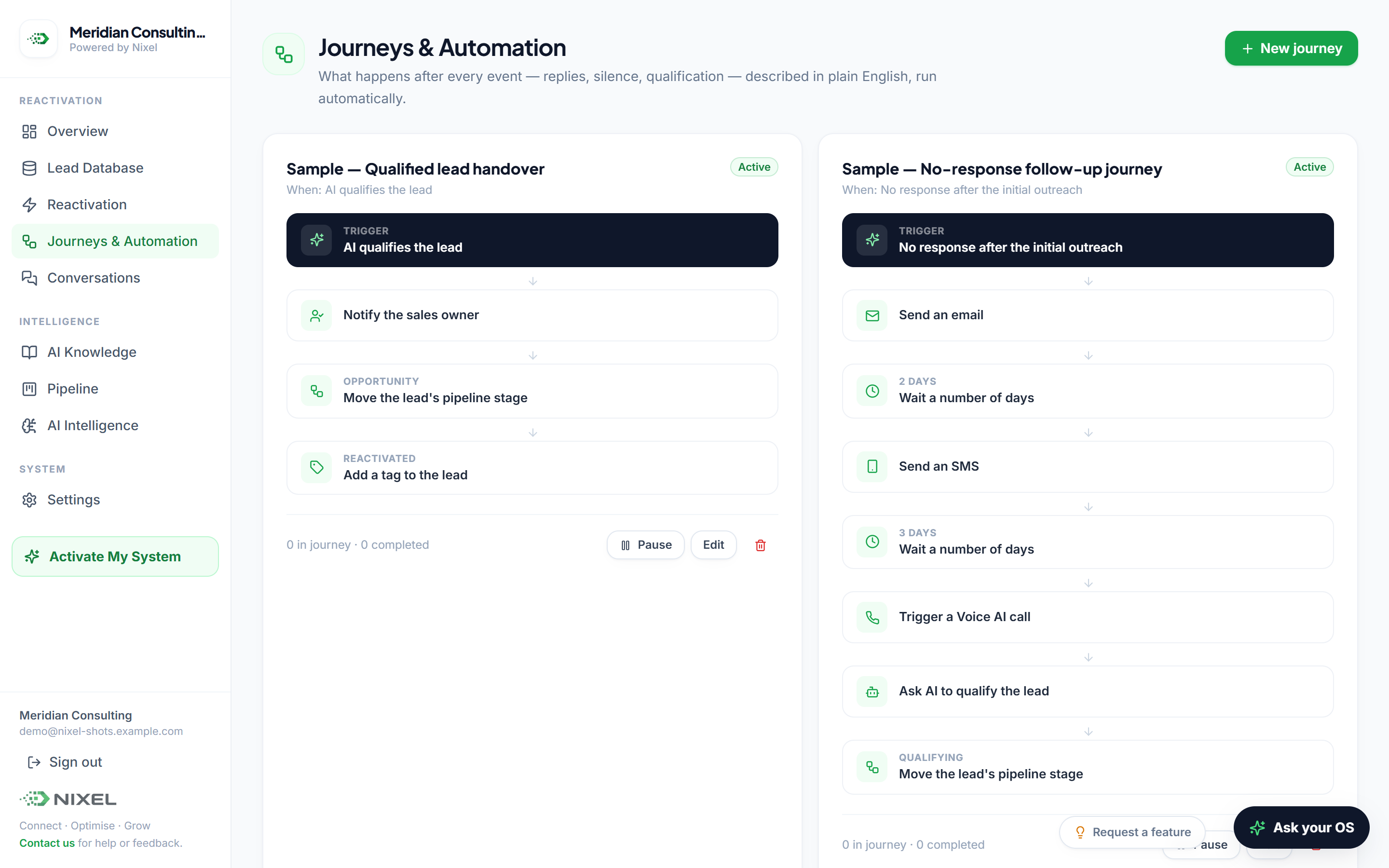
We build the AI Knowledge, qualification criteria, messaging, journeys, automation and channels around your business.
Pilot
Controlled reactivation runs on selected segments first — measured, monitored, safe.
Optimise
Engagement, AI performance, qualification accuracy and messaging are reviewed and refined.
Scale
Strategies that prove themselves expand across the appropriate parts of the database.
Manage
Nixel continues monitoring, maintaining and improving the reactivation engine over time.
Start by experiencing the engine yourself.
Before any assessment call, you can see exactly how Nixel analyses, re-engages and qualifies dormant leads — in minutes, personalised to your business.